You Won’t Believe These Hidden Terrains in Banff
Nestled in the heart of the Canadian Rockies, Banff is more than just lakes and peaks—its hidden terrains are next-level. I’m talking surreal limestone caves, alpine plateaus only locals know, and glacial valleys that feel untouched. What makes these places special? It’s not just the views—it’s the raw, untamed geology beneath your feet. If you're chasing something beyond the postcard spots, this is where Banff truly shines. While millions come for the turquoise waters of Lake Louise or the panoramic sweep from Sulphur Mountain, a deeper, quieter Banff waits just off the beaten trail. These concealed landscapes aren’t just scenic—they’re geological testaments to time, pressure, and ice. For the thoughtful traveler, exploring these hidden terrains offers not only solitude but a rare chance to walk through Earth’s ancient story, written in stone, ice, and wind.
Beyond the Postcard: Banff’s Secret Side
Banff National Park, Canada’s first national park and a UNESCO World Heritage Site, is often celebrated for its iconic vistas: the mirror-like surface of Moraine Lake at dawn, the grandeur of the Fairmont Chateau Lake Louise, and the gondola ride up Sulphur Mountain. Yet for those willing to look beyond the well-trodden paths, a different Banff reveals itself—one shaped by silence, solitude, and the quiet drama of geological transformation. These lesser-known terrains are not merely alternatives to popular attractions; they are essential chapters in understanding the park’s full character. They include hidden thermal springs nestled in forested valleys, remote canyons carved by glacial meltwater, and high-elevation plateaus where the wind carries the scent of alpine herbs and the only footprints belong to wildlife.
What sets these hidden terrains apart is their inaccessibility to casual tourists. They require intention, preparation, and often a willingness to embrace uncertainty. Unlike the paved trails and marked viewpoints of Lake Louise, these areas offer minimal signage, no shuttle services, and sometimes no cell reception. Yet this very remoteness enhances their appeal. Travelers who reach these places do not just see Banff—they experience it. The crunch of gravel underfoot, the sudden appearance of a marmot on a sun-warmed boulder, the way light shifts across a limestone cliff at midday—these are the intimate details that define true exploration.
Moreover, these hidden landscapes often provide a more authentic connection to the natural world. While popular sites are undeniably beautiful, they can feel curated, almost theatrical. In contrast, the backcountry valleys and secluded ridgelines of Banff offer unfiltered nature. Here, the land has not been reshaped for convenience. Rivers follow their natural courses, vegetation grows in wild patterns, and animal tracks crisscross snowfields long after winter. This authenticity is what draws many visitors—not just the desire to escape crowds, but to engage with a landscape that remains, in many ways, unchanged by human hands.
The Pulse of the Rockies: Understanding Banff’s Geological Story
To appreciate Banff’s hidden terrains, one must first understand the powerful geological forces that shaped them. The Canadian Rockies were formed over hundreds of millions of years through the collision of tectonic plates, a process that thrust ancient seabeds skyward to form some of the most dramatic mountain ranges on Earth. Banff sits within this dynamic zone, where the North American plate pushed over the Pacific plate, folding and faulting layers of sedimentary rock into towering peaks and deep valleys. This tectonic activity laid the foundation for the park’s unique terrain, but it was the subsequent influence of glaciers that sculpted its most distinctive features.
During the last ice age, massive glaciers covered the region, grinding down mountains and carving U-shaped valleys, cirques, and arêtes. As these glaciers retreated over 10,000 years ago, they left behind a landscape rich in glacial landforms—features that are still visible today. Moraines, for example, are ridges of rock and debris deposited by glaciers and can be found throughout Banff’s backcountry. Erratics—large boulders transported by ice and left stranded on plains—are scattered across high plateaus, standing as silent witnesses to ancient movement. These formations are not just curiosities; they are records of planetary change, offering clues about climate, erosion, and the slow passage of time.
Equally fascinating are the region’s fossil-rich rock layers. In areas like the Ramparts along the Bow Valley, visitors can see exposed limestone strata containing fossils of marine creatures that lived over 500 million years ago—when this region was covered by a shallow tropical sea. This juxtaposition of ancient ocean life and alpine grandeur underscores the profound transformations Earth has undergone. Volcanic activity, though less dominant than tectonic and glacial forces, also contributed to Banff’s geology, particularly in the formation of igneous intrusions and mineral deposits that feed the park’s famous hot springs.
Understanding this geological history deepens the experience of visiting Banff’s hidden terrains. When hikers walk across a glacially polished slab of rock or stand at the edge of a cirque lake, they are not just observing scenery—they are standing within a living geological museum. This awareness transforms casual sightseeing into meaningful exploration, where every ridge, valley, and outcrop tells a story millions of years in the making.
Underground Wonders: Caves and Thermal Formations
Beneath Banff’s dramatic surface lies a network of subterranean wonders—limestone caves, thermal seeps, and mineral-rich springs that few visitors ever see. These underground features are the result of water slowly dissolving carbonate rock over millennia, creating intricate passageways, dripstone formations, and hidden chambers. One of the most significant of these is Castleguard Cave, located in the northern reaches of the park. At over 21 kilometers in length, it is the longest known cave in Canada, though only its entrance zone is accessible to experienced cavers under strict permitting guidelines. The cave’s interior remains largely unexplored, preserving delicate formations like stalactites, flowstones, and frostwork crystals that grow at a rate of less than one centimeter per century.
While Castleguard is not open to the general public, other thermal and cave-related features offer more accessible ways to experience Banff’s underground world. Along the slopes near Maligne Canyon, seasonal meltwater feeds a series of sinkholes and underground streams that disappear into the limestone bedrock. In winter, these waterfalls freeze into towering ice columns, attracting ice climbers and photographers alike. Less known are the small thermal seeps scattered throughout the backcountry—natural springs where warm groundwater rises to the surface, often supporting unique micro-ecosystems. These seeps remain ice-free even in the coldest months, creating oases for insects, birds, and small mammals.
Exploring these underground features requires caution and preparation. Caves are fragile environments, sensitive to temperature changes, human touch, and contamination. Even a single footprint in a delicate mud deposit can last for decades. Parks Canada enforces strict regulations to protect these sites, including mandatory training for cavers and prohibitions on flash photography, which can encourage algae growth on cave walls. For casual visitors, the best way to engage with these wonders is through guided interpretive programs offered at the Cave and Basin National Historic Site—the birthplace of Canada’s national parks system—where exhibits explain the science and history of Banff’s subterranean world.
Visitors should also be aware of seasonal limitations. Many cave entrances are snow-covered or flooded during spring runoff, making access dangerous or impossible. Summer and early fall offer the safest conditions, but even then, proper gear—helmets, headlamps, and non-slip footwear—is essential. Above all, respect for these hidden spaces ensures their preservation. By treating them not as attractions but as natural treasures, travelers help maintain the integrity of Banff’s underground heritage.
High Plateaus and Hidden Valleys
Above the tree line, where the air thins and the wind carries a sharper bite, Banff’s high plateaus unfold in vast, open silence. These elevated landscapes—often overlooked in favor of lower-elevation lakes and trails—offer some of the park’s most pristine and geologically intriguing terrain. Areas north of Bow Valley and near the remote shores of Maligne Lake provide access to expansive alpine plateaus characterized by patterned ground, stone polygons, and frost-heaved rock formations. These features are the result of repeated freeze-thaw cycles, where water seeps into cracks, freezes, expands, and gradually shifts stones into geometric arrangements that resemble nature’s own mosaics.
These plateaus are not only visually striking but ecologically unique. Despite the harsh conditions, hardy alpine plants like moss campion, lichens, and Arctic willow cling to rocky crevices, forming fragile mats that can take decades to establish. Disturbing these plants—even by stepping off trail—can set back regrowth by years. Wildlife, too, depends on these open spaces. Bighorn sheep traverse the ridgelines in search of salt licks, while golden eagles soar above, scanning for movement. In the early morning light, it’s not uncommon to spot a grizzly bear moving through a high meadow, foraging for roots or insects.
Navigating these plateaus presents challenges. With few landmarks and frequent cloud cover, route-finding requires skill and proper tools—topographic maps, compasses, and GPS devices are essential. Unlike marked trails, these areas do not offer clear paths, and snow can linger into July, creating hidden crevasses or unstable footing. Travelers should carry emergency supplies, including shelter, extra food, and communication devices, as help may be hours or even days away. Yet for those prepared, the rewards are immense: panoramic views stretching across multiple mountain ranges, the sense of being the only person for miles, and the profound stillness that comes with true remoteness.
One such destination is the plateau region near Sunwapta Pass, where hikers can access a series of interconnected valleys that drain into the Sunwapta River. These valleys remain largely untouched by tourism, with no maintained trails or signage. Visitors must rely on backcountry navigation skills and Leave No Trace principles to minimize impact. The experience is not about reaching a single destination but about moving slowly through a landscape that demands attention and respect. In these hidden valleys, time feels different—slower, deeper, more connected to the rhythms of nature.
Glacial Landscapes You Can Actually Reach
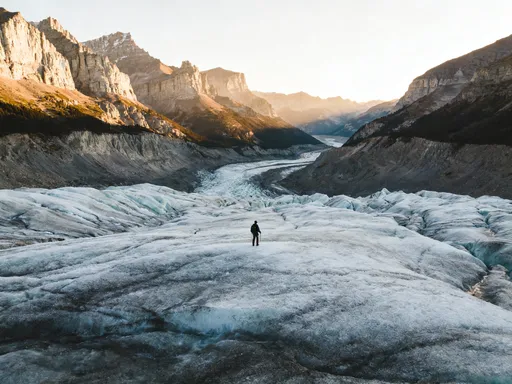
While many associate glacial landscapes with remote, inaccessible peaks, Banff offers several walkable glacial features that are both awe-inspiring and attainable for moderately experienced hikers. These include terminal moraines, proglacial lakes, and ice-carved amphitheaters—landforms created directly by the movement and retreat of glaciers. One of the most accessible examples is the viewpoint near Peyto Glacier, where a short but steep trail leads to a overlook of a vivid blue glacial lake fed by meltwater. Though the main trail is popular, lesser-known side routes offer quieter vantage points with unobstructed views of the glacier’s snout and the surrounding moraine field.
Moraines, in particular, are fascinating to explore. These ridges of rock, gravel, and debris were pushed forward by advancing glaciers and left behind as they retreated. Walking across a moraine feels like traversing a natural archive—the layers of sediment tell stories of glacial advance and retreat, while the scattered boulders offer insight into the glacier’s path. In areas like the Mistaya Valley, hikers can follow trails that run parallel to ancient moraines, observing how vegetation gradually reclaims these rocky landscapes over time. Lichens colonize first, followed by grasses and shrubs, eventually leading to full alpine meadows in a process that can take centuries.
Proglacial lakes—bodies of water dammed by glacial debris—are another accessible glacial feature. Lakes such as Bow Lake and Hector Lake sit in basins carved by ice and dammed by moraines, their waters colored by glacial flour—fine rock particles suspended in meltwater that give the lakes their signature turquoise hue. These lakes are not static; they are part of an ongoing geological process. As glaciers continue to retreat due to climate change, new lakes form, while others may eventually drain or fill with sediment. Observing these changes offers a tangible connection to planetary dynamics, reminding visitors that Banff’s landscape is not fixed but constantly evolving.
For those seeking a more immersive experience, guided interpretive hikes led by Parks Canada naturalists provide valuable insights into glacial geology. These programs often include hands-on activities, such as identifying glacial striations—scratches on rock surfaces caused by moving ice—or measuring melt rates at accessible glacier edges. Safety is emphasized throughout, with guidance on avoiding crevasses, recognizing unstable slopes, and understanding weather patterns that can change rapidly at high elevations. With the right preparation, even non-experts can engage meaningfully with Banff’s glacial landscapes, gaining both knowledge and a deeper appreciation for the forces that shaped them.
Choosing the Right Hidden Route: Experience vs. Expertise
Not all of Banff’s hidden terrains are suitable for every traveler, and matching the destination to one’s skill level is crucial for both safety and enjoyment. The park offers a spectrum of backcountry experiences, which can be broadly categorized into three tiers: beginner-friendly detours, intermediate backcountry hikes, and expert-only zones. Each tier requires different levels of preparation, physical fitness, and technical knowledge, and understanding these distinctions helps travelers make informed decisions.
Beginner-friendly detours include side trails that branch off from main routes, offering a taste of solitude without significant risk. Examples include the trail to Johnston Canyon’s upper falls, which extends beyond the popular lower falls into a quieter, forested stretch, or the detour from the Lake Louise lakeshore to the Fairview Lookout, which provides panoramic views with minimal elevation gain. These routes are well-marked, typically under five kilometers, and suitable for families and casual hikers. They offer glimpses of hidden terrain without requiring specialized gear or navigation skills.
Intermediate backcountry hikes demand more preparation. These include multi-day treks such as the Skyline Trail or the Rockwall Trail in nearby Kootenay National Park, which involve camping, route-finding, and exposure to variable weather. Hikers should carry bear spray, know how to use a map and compass, and be prepared for sudden changes in conditions. These routes often pass through high alpine zones with limited shelter, so proper clothing and emergency supplies are essential. Parks Canada requires backcountry permits for overnight stays, ensuring that only prepared travelers access these remote areas.
Expert-only zones, such as the interior of Castleguard Cave or the high glaciers near Mount Columbia, are strictly regulated and intended for those with advanced training. These areas may require technical climbing gear, glacier travel experience, and knowledge of avalanche safety. Access is often restricted, and permits are limited to minimize environmental impact and ensure safety. For most visitors, the goal is not to reach these extreme zones but to appreciate their existence from a respectful distance, understanding that some places are preserved precisely because they remain difficult to access.
Regardless of skill level, all travelers should check trail conditions with Parks Canada before departure, monitor weather forecasts, and file a trip plan with a trusted contact. By aligning expectations with ability, visitors can safely explore Banff’s hidden terrains while minimizing risk and maximizing reward.
Leave No Trace: Respecting Fragile Terrain
The very qualities that make Banff’s hidden terrains so special—solitude, natural integrity, and ecological sensitivity—also make them vulnerable. These landscapes recover slowly from human impact, and even minor disturbances can have lasting consequences. A single footstep off trail can crush decades-old lichen, while discarded food waste can attract wildlife and alter natural behaviors. This is why the Leave No Trace principles are not just recommendations but essential practices for anyone venturing into these areas.
The seven core principles—plan ahead and prepare, travel and camp on durable surfaces, dispose of waste properly, leave what you find, minimize campfire impacts, respect wildlife, and be considerate of other visitors—are especially critical in Banff’s backcountry. Staying on designated trails prevents soil erosion and protects fragile vegetation. Packing out all trash, including biodegradable items like apple cores, helps maintain the natural balance. Avoiding shortcuts on switchbacks, though tempting, prevents trail braiding and long-term damage to slopes.
Parks Canada enforces these guidelines through education, signage, and monitoring. Rangers conduct regular patrols, and backcountry users are required to follow specific regulations, such as cooking at least 100 meters from water sources and storing food in bear-proof containers. Violations can result in fines or permit revocation, underscoring the seriousness of protecting these areas. Yet beyond compliance, the deeper goal is cultivating a mindset of stewardship—recognizing that these landscapes are not ours to claim but to care for.
Travelers can further support conservation by participating in citizen science programs, such as reporting wildlife sightings or contributing to trail condition surveys. Choosing eco-friendly gear, minimizing single-use plastics, and supporting sustainable tourism operators also contribute to long-term preservation. When every visitor acts with intention and respect, the hidden terrains of Banff remain not just intact, but alive—ready to inspire wonder for generations to come.
Banff’s most unforgettable moments aren’t found at crowded lookouts—they’re etched into its hidden terrains, waiting for curious travelers. By understanding the land’s story and moving responsibly, we don’t just visit nature—we connect with it. The real adventure? Realizing how much more there is beneath the surface.