Where the Mountains Whisper: Wandering Through Sarajevo’s Wild Heart
Have you ever felt nature call your name in a city? Sarajevo, tucked between rugged peaks and green valleys, surprised me with its wild beauty. Far from just a historical crossroads, it’s a place where urban life dances with untouched nature. Wandering here isn’t just walking—it’s breathing in crisp mountain air, stumbling upon hidden trails, and discovering how landscapes shape a city’s soul. This is nature, raw and real. For women who seek both peace and purpose in their travels, Sarajevo offers a rare gift: a city that doesn’t hide its wilderness but wears it proudly, like a well-loved coat passed through generations. Here, the mountains aren’t distant postcard views—they are companions, witnesses, and quiet healers.
The City Cradled by Nature
Sarajevo lies cradled in a long, narrow valley, flanked on all sides by the jagged arms of the Dinaric Alps. This is not a city imposed upon the landscape, but one born from it—shaped by elevation, river flow, and seasonal rhythm. The Miljacka River, slender but persistent, threads through the heart of the city like a silver needle stitching together centuries of life. On either bank, Ottoman-era homes with red-tiled roofs stand shoulder to shoulder with Austro-Hungarian facades, all framed by forested slopes that rise steeply into the sky. It’s a visual dialogue between civilization and wildness, one that feels neither forced nor accidental, but deeply intentional.
What makes Sarajevo unique among European capitals is how seamlessly nature integrates into daily existence. Unlike cities that wall themselves off from the elements, Sarajevo opens its arms to the seasons. In spring, cherry blossoms spill over stone walls near residential lanes. In autumn, golden leaves drift down from chestnut trees onto cobblestone paths. The air carries a crispness year-round, a gift from high elevation and surrounding forests. Residents speak of the mountains not as distant attractions but as part of their identity—places where families picnic on weekends, where children learn to hike before they drive, and where silence is still valued.
This closeness to nature isn’t merely aesthetic; it shapes lifestyle and tradition. Many households keep small vegetable gardens on hillside plots, tending beans, tomatoes, and herbs with care passed down through generations. Elderly women in headscarves can be seen walking uphill with woven baskets, gathering wild herbs or mushrooms in season. The rhythm of life here mirrors the natural world—slower, cyclical, grounded. For a woman seeking travel that nourishes both body and spirit, this connection offers a profound sense of balance often missing in modern urban life.
Wandering the Green Artery: The Miljacka River Trail
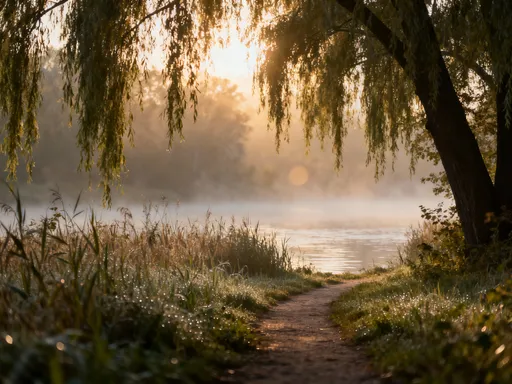
One of the gentlest ways to begin a journey into Sarajevo’s natural soul is along the Miljacka River Trail. This green corridor stretches for several kilometers, beginning near the historic Baščaršija market and extending westward toward Koševo Park. It’s not a manicured promenade, but a lived-in path—part pedestrian walkway, part nature reserve, part community gathering space. Benches shaded by willow and plane trees invite quiet reflection. Children chase ducks near shallow banks. Couples stroll hand in hand, while joggers and cyclists move steadily along paved lanes.
The sensory experience here is rich and calming. The constant murmur of flowing water creates a natural white noise, softening the city’s edges. In summer, the scent of linden blossoms hangs in the air; in winter, frost coats the reeds along the bank like delicate lace. Birdsong—robins, wagtails, even the occasional kingfisher—adds melody to morning walks. This trail doesn’t demand athletic prowess or planning. It welcomes the slow, the curious, the weary. It’s ideal for a woman traveling solo or with family, offering safety, accessibility, and beauty without spectacle.
More than just a scenic route, the Miljacka Trail serves as a bridge between urban energy and wilderness. As you walk westward, the city’s density gradually gives way to open green spaces. Public parks merge with forested inclines. The sounds of traffic fade. You begin to notice wild strawberries growing in hidden corners, or a red squirrel darting across the path. This transition isn’t abrupt—it unfolds gently, like a story told in whispers. And that’s the essence of Sarajevo’s charm: nature doesn’t announce itself with fanfare. It simply appears, waiting to be noticed.
Local families often use this trail for weekend outings, spreading blankets under trees for picnics with fresh bread, cheese, and fruit. There’s a quiet pride in how people care for this space—litter bins are used, dogs are leashed, and walkers yield to one another with polite nods. It’s a small thing, perhaps, but meaningful: a shared understanding that this green artery belongs to everyone and must be protected. For a visitor, walking here feels less like tourism and more like temporary belonging.
Ascending Trebević: A Mountain Within Reach
Rising 1,600 meters above sea level, Mount Trebević looms over Sarajevo like a protective elder. Once home to a famous bobsled track built for the 1984 Winter Olympics, it now stands as a symbol of both ambition and resilience. The mountain is easily accessible via a modern cable car that departs from the southern edge of the city, offering panoramic views even before the hike begins. As the cabin climbs, the valley unfolds below—rooftops shrinking into a mosaic, the Miljacka glinting like a ribbon. For women who may hesitate at strenuous climbs, this ride offers a gentle introduction to high-altitude beauty without physical strain.
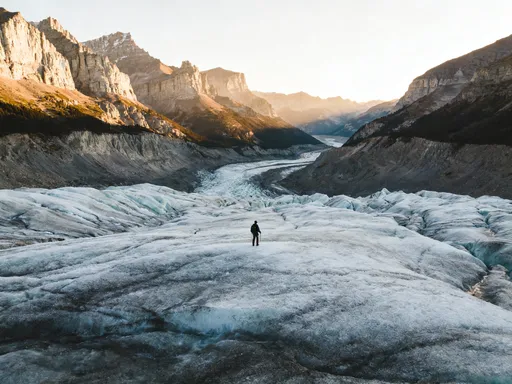
At the top, a network of trails branches in every direction. Some paths are paved and well-marked, suitable for casual walkers; others wind into pine forests on uneven terrain, inviting deeper exploration. The air is noticeably cooler and cleaner, carrying the sharp, refreshing scent of conifers. On clear days, you can see across the Sarajevo basin to distant peaks still capped with snow in early spring. The contrast between city and summit is striking—yet the connection remains visible, tangible. This isn’t escape; it’s elevation, both literal and emotional.
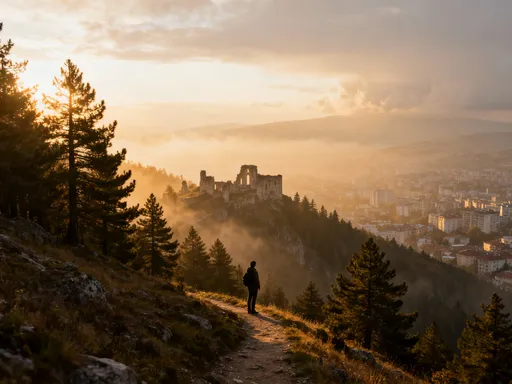
Trebević also carries quiet historical layers. Scattered among the trees are remnants of wartime structures—abandoned bunkers, crumbling walls—now softened by moss and ivy. Nature has begun its slow reclamation, turning scars into sanctuaries. Rather than feeling heavy, these traces evoke reflection, not sorrow. They remind visitors that healing takes time, that landscapes—and people—can grow back stronger. Local guides sometimes share stories of how families used these slopes for refuge, or how young people now come here to ski, hike, and simply breathe.
One of the most rewarding routes leads to the summit of Veliki Vlahinja, reachable by a moderate two-hour hike. The path alternates between sunlit clearings and shaded woodland, with occasional viewpoints that stop you mid-step. There are no crowds, no souvenir stands, no loudspeakers—just the crunch of gravel underfoot and the wind in the treetops. Along the way, you might pass a man tending a small herb garden on a rocky outcrop, or a group of schoolchildren learning to identify bird calls. These moments of human presence feel natural, unforced—a reminder that this mountain belongs to the community as much as to nature.
Igman’s Hidden Valleys and Pine Forests
Just 20 kilometers southwest of Sarajevo lies Mount Igman, a highland plateau less visited but equally enchanting. Where Trebević feels intimate and immediate, Igman offers expansiveness—a sense of solitude that wraps around you like a warm shawl. The drive there winds through narrow roads flanked by beech and pine forests, each turn revealing a new vista. In summer, alpine meadows burst with wildflowers: purple clover, yellow hawkweed, delicate gentians. In winter, the landscape transforms into a serene blanket of snow, popular with cross-country skiers and snowshoers.
Igman’s forests carry a distinct aroma—pine resin, damp earth, and something indefinable, like memory itself. The air is so clean it feels like drinking water. Trails here are quieter, less trodden. You might walk for an hour without seeing another soul. And yet, signs of life remain: sheep bells echoing in the distance, the faint path made by grazing animals, a shepherd’s stone hut tucked into a clearing. These are not performances for tourists but remnants of a pastoral tradition still alive in rural Bosnia.
One of the most peaceful spots is the clearing near Crni Guber, a natural spring known for its cold, mineral-rich waters. Locals believe in its restorative properties, filling bottles to take home. Sitting beside it, listening to the trickle of water over stone, you understand why people speak of mountains as healers. There’s no grandeur here, no dramatic cliffs—just simplicity, purity, and time. For a woman seeking stillness, this is sanctuary.
Igman also played a role during difficult times in the region’s history, serving as a corridor for humanitarian aid and a hideaway for those in need. Today, it stands as a place of quiet dignity. Hiking trails pass near former military sites, now overgrown and peaceful. Interpretive signs offer brief, respectful explanations without sensationalism. The message is clear: history is remembered, but life moves forward. Nature, once again, leads the way.
The Magic of Unplanned Detours
Some of the most memorable moments in Sarajevo happen off the map. They come not from ticking off attractions but from wandering without agenda. A side path that beckons after a light rain. A wooden footbridge over a stream you didn’t know existed. A hillside bench with a view that makes your breath catch. These are the gifts of slow travel—the unexpected encounters that stay with you long after the journey ends.
I remember one afternoon, after leaving the main trail on Trebević, I followed a narrow path marked only by hoofprints. It led to a small clearing where wild strawberries grew among the rocks. A few meters away, an old stone well stood covered in lichen. There was no sign, no name, no mention in any guidebook. And yet, it felt significant—like a secret shared between the mountain and me. I sat there for nearly an hour, eating berries, writing in my journal, listening to the wind. No photos, no posts, just presence.
This kind of experience isn’t accidental. It requires a shift in mindset—from seeing travel as collection to seeing it as connection. It means walking slowly, looking closely, allowing yourself to get mildly lost. It means trusting that the path will reveal itself. For women who often carry the weight of planning—meals, schedules, family needs—this kind of aimless wandering can feel radical, even liberating. It’s permission to do nothing but observe, breathe, be.
Children in Sarajevo seem to understand this instinctively. You’ll see them chasing butterflies in meadows, building cairns by streams, laughing as they slip on mossy stones. Their joy isn’t tied to destinations or achievements. It’s in the doing, the discovering, the being outside. As adults, we can relearn this. We can let go of the need to optimize every moment and instead open ourselves to wonder. In Sarajevo, the land invites this gently, without pressure.
Nature’s Role in Healing and Identity
The relationship between Sarajevo and its surrounding nature goes beyond recreation. It is, in many ways, a relationship of healing. The mountains have witnessed hardship, yes—but they have also provided refuge, solace, and strength. During times of isolation, families escaped to mountain cabins, finding safety in elevation and forest cover. Afterward, those same trails became places of return, of reconnection, of rebuilding.
Today, outdoor activity is woven into the city’s recovery. Community hikes are organized regularly, bringing together people of all ages. Yoga sessions take place in Koševo Park in summer. Schools lead nature education programs on Trebević, teaching children about local plants, birds, and conservation. These are not grand gestures, but quiet acts of resilience—ways of saying, “We are still here. We are healing. We are alive.”
The mountains, in turn, offer something intangible but essential: continuity. They stand unchanged while cities change around them. They remind people that life persists, that seasons return, that growth follows decay. This isn’t romanticized; it’s practical wisdom. Women in Sarajevo often speak of walking in nature as a form of self-care—something they do not for vanity or fitness, but for peace of mind. It’s a way to process grief, to gain perspective, to feel rooted again.
There’s a Bosnian saying: “Gdje je planina, tu je i nada.” Where there is a mountain, there is hope. It’s a simple phrase, but it carries deep truth. In a world that often feels unstable, the presence of enduring natural landscapes offers quiet reassurance. And in Sarajevo, that presence is never far away.
Practical Wandering: How to Explore Responsibly
For those ready to explore Sarajevo’s natural heart, preparation enhances enjoyment. Comfortable walking shoes are essential—trails can be rocky or muddy, especially after rain. A lightweight jacket is wise, as mountain weather changes quickly. Carry water, a small snack, and a basic map or offline trail app. While many locals speak some English, learning a few words of Bosnian—like “hvala” (thank you) or “put” (path)—can open friendly conversations.
Start small. Begin with the Miljacka Trail or a short cable car ride up Trebević. From there, you can decide whether to hike further or simply enjoy the view. Public buses serve trailheads, making access easy without a car. If visiting Igman, consider hiring a local guide for your first trip—they know safe routes and hidden gems. Always check weather conditions before heading out, especially in shoulder seasons.
Responsible exploration means respecting both nature and community. Stick to marked trails to protect fragile ecosystems. Avoid picking plants or disturbing wildlife. Carry out all trash—even biodegradable items like fruit peels, which can disrupt local habitats. If you pass a shepherd or rural home, greet politely but don’t intrude. These are working landscapes, not stage sets.
Consider visiting in spring or autumn. Summer brings warmth and greenery, but also more tourists. Winter offers stillness and snow-covered beauty, though some trails may be icy. Off-season travel supports local economies without overwhelming them. And remember: the goal isn’t to cover ground, but to deepen connection. Walk slowly. Pause often. Let the mountains speak.
Conclusion
Wandering through Sarajevo is not about conquering peaks or collecting photos. It’s about presence—about allowing yourself to be moved by the whisper of wind through pines, the glint of sunlight on a stream, the quiet strength of a city that has learned to heal. The mountains here don’t demand attention; they offer it gently, to those who listen. For women seeking travel that nourishes the spirit, this is a destination unlike any other—a place where nature isn’t separate from life but woven into its very fabric. By walking these paths, we don’t just see Sarajevo. We feel it. And sometimes, that’s more than enough.