You Won’t Believe These Hidden Markets in Chefchaouen
Nestled in the Rif Mountains, Chefchaouen is more than just blue walls and scenic alleys—its shopping scene holds secrets most travelers miss. I wandered far beyond the main square and discovered vibrant local markets where craftsmanship meets authenticity. From handwoven blankets to ceramic treasures, each find told a story. If you think shopping here is just about souvenirs, think again—this town hides gems that redefine meaningful travel.
The Allure of Chefchaouen Beyond the Blue
Chefchaouen, often referred to as the "Blue Pearl" of Morocco, captivates visitors with its cascading indigo-hued buildings set against the rugged backdrop of the Rif Mountains. While many come for the photogenic streets and tranquil atmosphere, few realize that the town’s true soul lies in its everyday rhythms—especially in the quiet corners where locals gather, trade, and create. The blue paint, believed to symbolize the sky and heaven, was traditionally applied to deter mosquitoes and reflect the sun, but over time it has become a signature of the town’s peaceful spirit. Beyond aesthetics, Chefchaouen is a cultural crossroads shaped by centuries of Andalusian influence and deep-rooted Berber heritage. This blend is especially evident in its crafts and commerce, where tradition is not preserved behind glass but lived through daily practice.
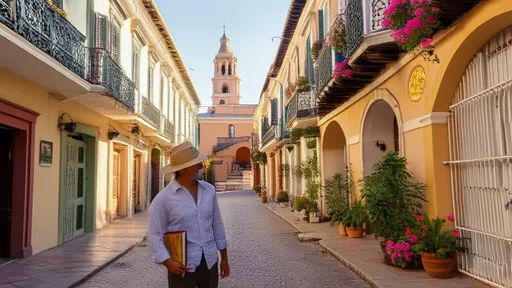
For many visitors, the journey ends at Plaza Outa el Hammam, the bustling central square lined with cafés and souvenir stalls. But just a few winding steps uphill or down into the lower neighborhoods, a different world unfolds—one where shopping is not a performance for tourists but a vital part of community life. These quieter zones offer an intimate window into Moroccan domestic culture, where goods are not mass-produced but made by hand, often within family homes. The experience of discovering a tucked-away stall selling hand-knitted wool caps or intricately painted tiles is not just about acquisition; it’s about connection. In these moments, travel transforms from observation to participation, and the line between visitor and local begins to blur in the most meaningful way.
The Heartbeat of Local Commerce: Out-of-the-Way Markets
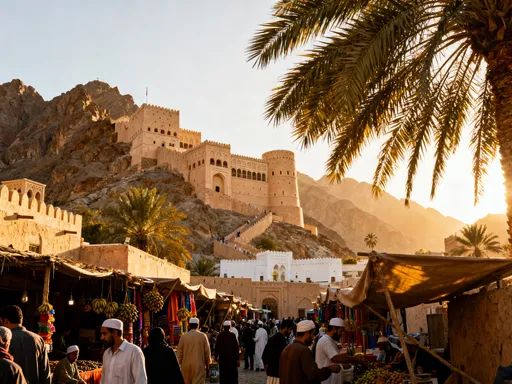
Away from the well-trodden paths of the medina’s main thoroughfares, Chefchaouen’s hidden markets pulse with authenticity. These are not markets designed for Instagram backdrops but for real life—where mothers buy fabric for their children’s clothes, elders select wool for winter garments, and artisans trade tools and materials. Tucked into narrow alleyways or nestled in the lower quarters near the old kasbah, these informal bazaars operate with a quiet dignity. Vendors set up their wares on low wooden tables or colorful blankets spread across stone steps, offering everything from dried herbs and spices to hand-stitched leather slippers.
One such market, located just below the Spanish Mosque walking trail, opens only in the early hours of Thursday and Sunday mornings. Locals from surrounding villages descend the mountain paths with donkeys laden with goods, bringing fresh produce, woven baskets, and natural dyes. Here, prices remain fair because the focus is on necessity, not tourism. There are no inflated tags or pushy sales tactics—just honest exchange. A woman selling hand-dyed wool might explain how she uses saffron and henna to achieve warm earth tones, while a potter arranges his cobalt-glazed bowls with quiet pride. These interactions are not staged; they unfold naturally, inviting travelers who take the time to listen and engage.
Shopping in these spaces feels less like consumption and more like cultural immersion. The language barrier may exist, but smiles, gestures, and shared curiosity bridge the gap. Children peek from behind their mothers’ aprons, curious about foreign faces, while elders nod in quiet acknowledgment. It is here, far from the postcard-perfect alleys, that the heartbeat of Chefchaouen can truly be felt—a rhythm defined not by foot traffic but by the steady pulse of community life.
Handmade Treasures: What You’ll Actually Want to Bring Home
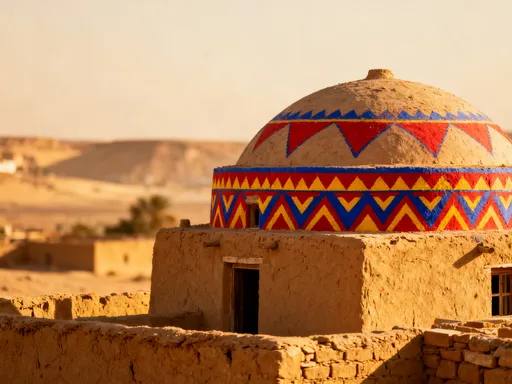
While souvenirs in tourist-heavy areas often lean toward the generic—keychains, magnets, and machine-printed scarves—the hidden markets of Chefchaouen offer something far more valuable: authenticity. Among the most sought-after items are the woolen burnouses, traditional hooded cloaks woven by Berber women using techniques passed down through generations. These garments are thick, warm, and often adorned with geometric patterns that carry symbolic meaning—diamonds for protection, zigzags for water, and crosses for the four corners of the earth. Each piece is unique, bearing the subtle imperfections that mark it as human-made rather than factory-produced.
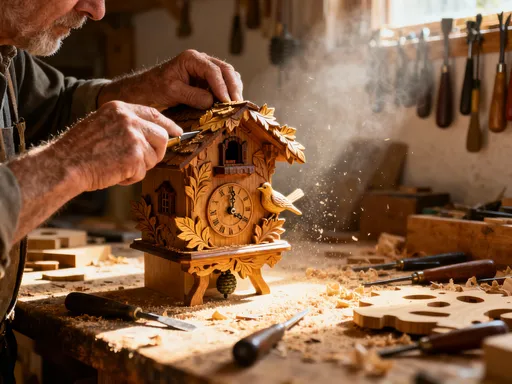
Equally compelling are the hand-dyed scarves and shawls, dyed using natural pigments from saffron, indigo, and pomegranate rind. The process is labor-intensive: wool or cotton is soaked, rinsed, and sun-dried multiple times to achieve deep, lasting color. The scent of raw wool and plant dyes lingers in the air, adding a sensory richness to the shopping experience. Then there are the engraved wooden boxes, often made from thuya wood, a fragrant, golden-hued timber native to northern Morocco. Carved with floral motifs or Arabic calligraphy, these boxes are both functional and decorative, perfect for storing jewelry or keepsakes.
Perhaps the most iconic craft is the town’s cobalt-blue pottery. Unlike the mass-produced ceramics found in larger cities, Chefchaouen’s pottery is hand-thrown and hand-painted, with each piece featuring slight variations in shade and design. The blue used in the glaze is often derived from cobalt oxide, giving it a depth that shifts in different lights—from midnight to sky blue. Many pieces are etched with Berber symbols or Islamic-inspired patterns, making them not just beautiful but meaningful. To hold one of these bowls or tagines is to hold a fragment of the town’s artistic soul, shaped by fire, earth, and generations of skill.
Where Artisans Work: From Workshop to Wallet
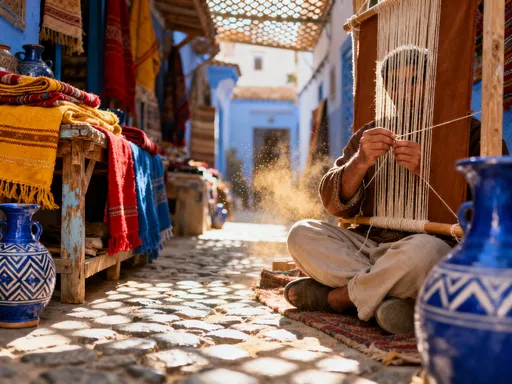
One of the most rewarding aspects of exploring Chefchaouen’s hidden markets is the opportunity to see craftspeople at work. In small, family-run ateliers tucked into courtyards or ground-floor homes, weavers sit at wooden looms, their hands moving with rhythmic precision. Potters shape clay on foot-powered wheels, their faces focused, their fingers steady. These workshops are not tourist attractions—they are workplaces, often passed down through families for decades. Many welcome visitors quietly, offering a nod or a brief explanation in broken French or Spanish, but they do not perform for cameras or pause their labor for photo ops.
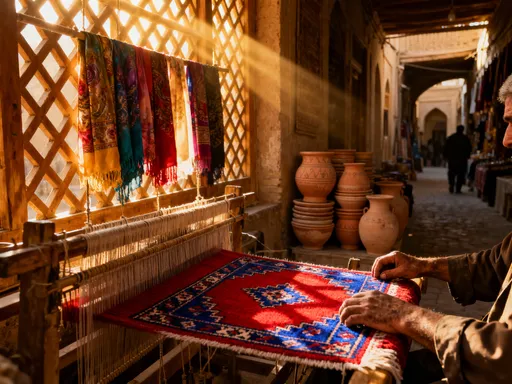
In one such weaving studio near the edge of the medina, a grandmother and her granddaughter work side by side, the elder guiding the younger through the complex patterns of a new hanbel—a traditional Berber rug. The loom is made of dark, weathered wood, its frame held together by rope and time. The wool, dyed in vibrant reds and deep blues, is spun locally and softened through repeated washing. When asked about the meaning of the symbols, the grandmother points to a series of interlocking triangles and says simply, "Protection. For the home." There is no need for translation; the intent is clear.
These workshops often allow visitors to purchase directly, cutting out middlemen and ensuring that the full value of the sale goes to the maker. Some artisans even offer custom orders—perhaps a scarf in a specific color or a pottery piece with a personal inscription. Others can produce simple items like coasters or mugs within a day, giving travelers a truly personalized souvenir. Buying from these creators is more than a transaction; it is a gesture of respect and recognition. It acknowledges the hours of labor, the cultural knowledge, and the quiet dignity behind every piece. In a world of fast fashion and disposable goods, this kind of purchase feels deeply intentional.
The Rhythm of Market Days: Timing Your Visit Right
To experience Chefchaouen’s markets at their most authentic, timing is essential. Unlike the permanent stalls in the main square, many of the hidden markets operate on a weekly or even daily cycle, shaped by local routines rather than tourist demand. The busiest days are typically Thursday and Sunday mornings, when farmers and artisans from nearby villages bring their goods into town. Arriving early—between 7:00 and 9:00 a.m.—offers the best chance to see the markets come alive, with vendors unpacking their wares, laying out fresh produce, and arranging handcrafted items.
Midday, especially in summer, brings intense heat, and many smaller vendors pack up by noon. The golden hours of late afternoon, when the sun softens and the blue walls glow, are better suited for photography and leisurely browsing in the main medina. But for those seeking genuine interaction, the morning hours are unmatched. This is when locals do their shopping, and travelers who arrive early are more likely to be seen as curious participants rather than passive observers. It’s not uncommon to be invited for a cup of mint tea or offered a sample of homemade bread from a vendor’s basket.
Practical preparation enhances the experience. Carrying small denominations of Moroccan dirhams—20s, 50s, and 100s—makes transactions smoother, as many vendors do not carry change for large bills. Cash is essential; credit cards are rarely accepted in these informal markets. Comfortable walking shoes are a must, given the steep, uneven terrain. And while photography can capture the beauty of these scenes, it’s important to ask permission before taking pictures of people, especially women and elders. A simple gesture or a smile often suffices, and most will nod in agreement—if not, it’s best to respect their privacy.
Smart Shopping Without the Stress: Haggling with Respect
Haggling is an expected part of the shopping culture in Morocco, but in Chefchaouen’s hidden markets, it should be approached with sensitivity. Unlike in larger cities where aggressive bargaining is common, these smaller, community-focused markets operate on mutual respect. Vendors are not wealthy merchants but artisans and farmers who rely on these sales for their livelihood. A fair price reflects not just the cost of materials but the hours of labor and cultural knowledge embedded in each item.
The key to respectful negotiation is a friendly demeanor. Begin with a greeting—"Salam alaikum" (peace be upon you)—and a smile. Ask the price, then offer slightly less—perhaps 20 to 30 percent—while acknowledging the quality. Phrases like "This is beautiful, but can we agree on a better price?" or "I love this—what is your best price for it?" go a long way. Most vendors will counter, and after a few polite exchanges, a fair compromise is usually reached. The goal is not to win but to reach a price that feels fair to both parties.
It’s also important to recognize when to stop. If the vendor seems unwilling to lower the price further, accept it gracefully. Walking away is acceptable, but doing so with courtesy maintains dignity on both sides. And if an item feels overpriced, consider that its value may lie in its craftsmanship rather than its materials. A handwoven blanket that costs 300 dirhams may seem expensive compared to a machine-made one for 100, but the former represents days of work and cultural heritage. Paying a fair price is not just smart shopping—it’s ethical travel.
Why These Markets Matter: Travel That Gives Back
Choosing to explore Chefchaouen’s hidden markets is more than a shopping decision—it’s a choice to engage with travel in a more meaningful way. In an era of mass tourism and homogenized experiences, these quiet corners offer something rare: authenticity. By supporting local artisans and small vendors, travelers contribute directly to the community’s economic resilience. Every purchase helps sustain traditional crafts that might otherwise fade in the face of industrialization and global markets.
Contrast this with the commercialized souks of Marrakech or Fes, where middlemen and export-focused shops dominate. In those cities, the journey from maker to buyer is long and fragmented. In Chefchaouen’s hidden markets, it is often direct. The woman who wove the scarf is the same one who sells it. The potter who shaped the bowl stands beside his kiln. This transparency fosters trust and deepens the emotional value of what is bought. A souvenir becomes more than an object—it becomes a memory, a story, a connection.
Moreover, this kind of travel cultivates mutual respect. When visitors take the time to learn, to listen, and to pay fairly, they are not just consumers but participants in a shared cultural exchange. They leave not only with beautiful items but with a deeper understanding of Moroccan life. And the locals, in turn, see travelers not as fleeting faces but as people who value their work and heritage.
Chefchaouen, in all its blue-hued serenity, is more than a destination—it is an invitation. An invitation to look beyond the surface, to wander deeper, to connect more fully. Its hidden markets are not just places to shop but spaces to belong, even if only for a moment. In choosing to explore them, travelers do more than collect souvenirs; they become part of a story—one woven in wool, shaped in clay, and painted in blue, one thoughtful purchase at a time.